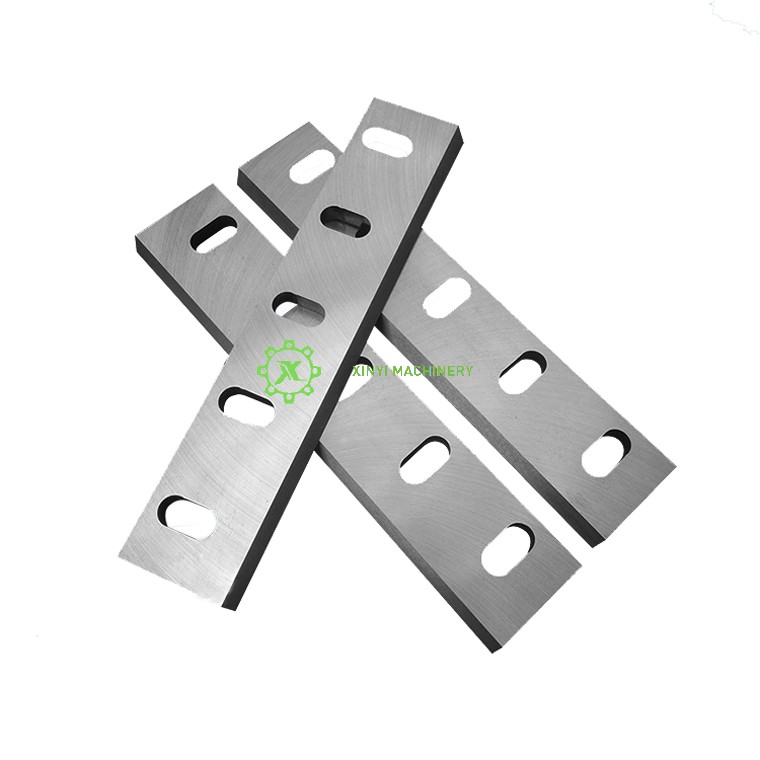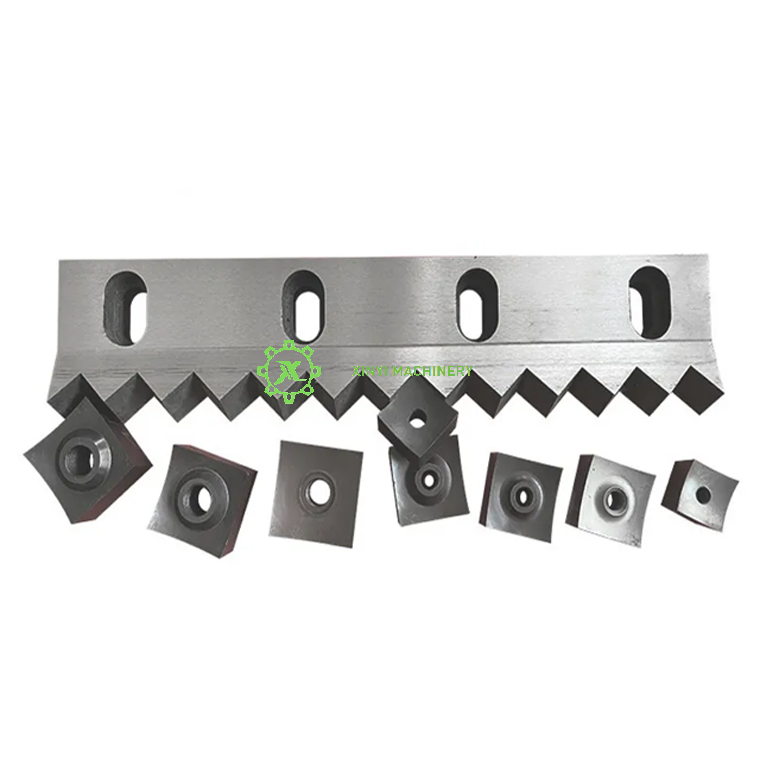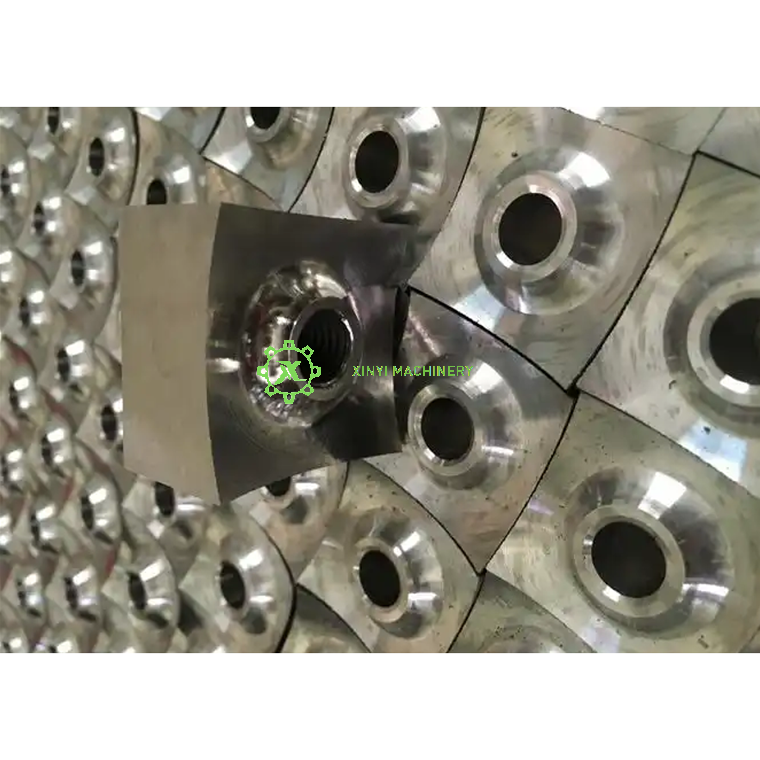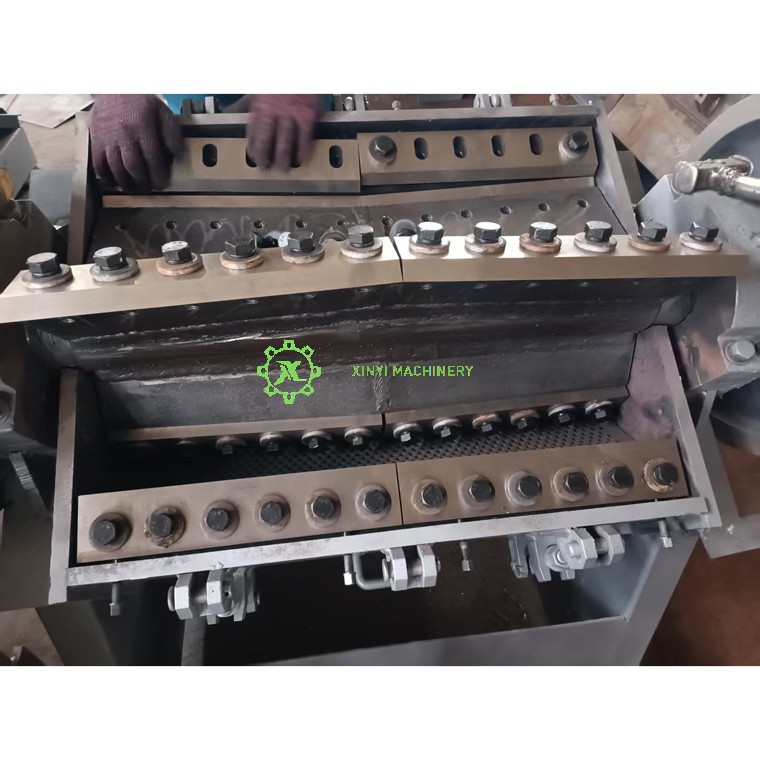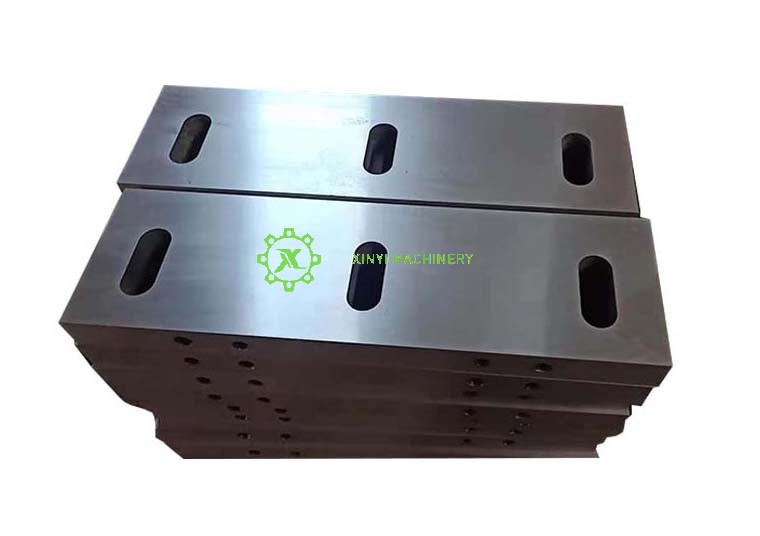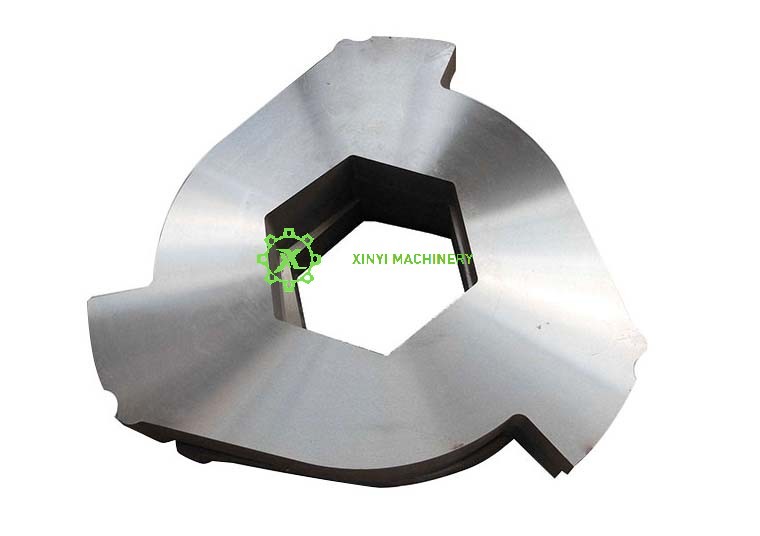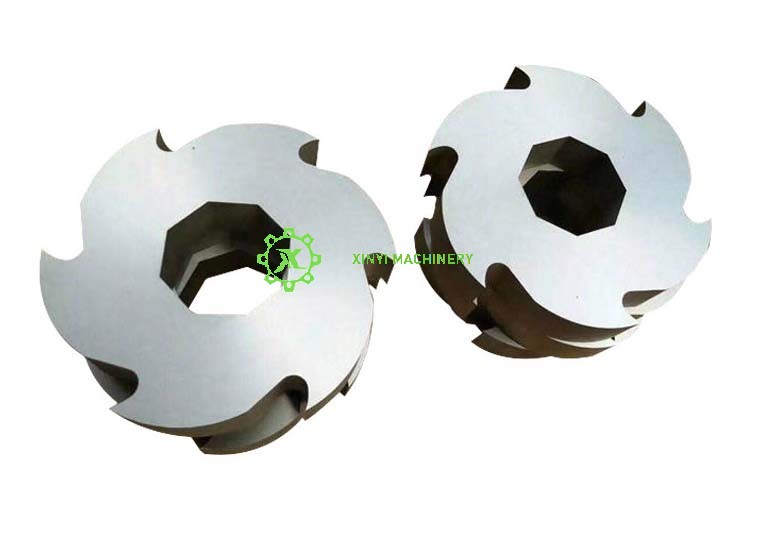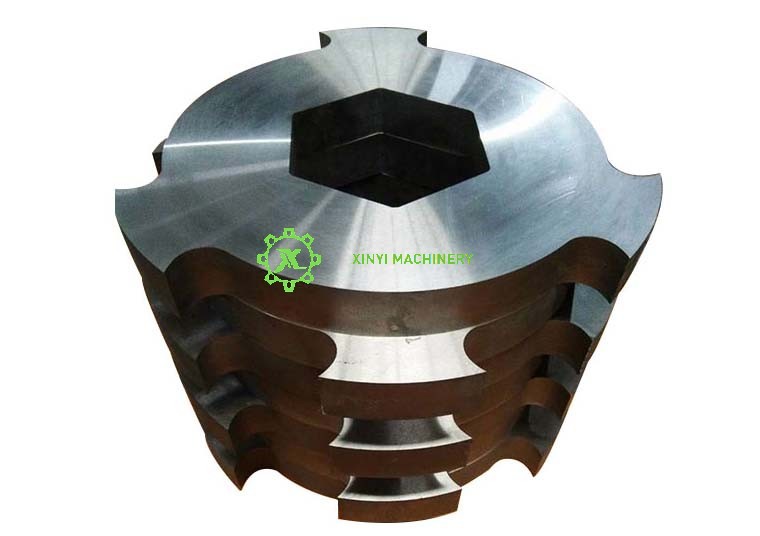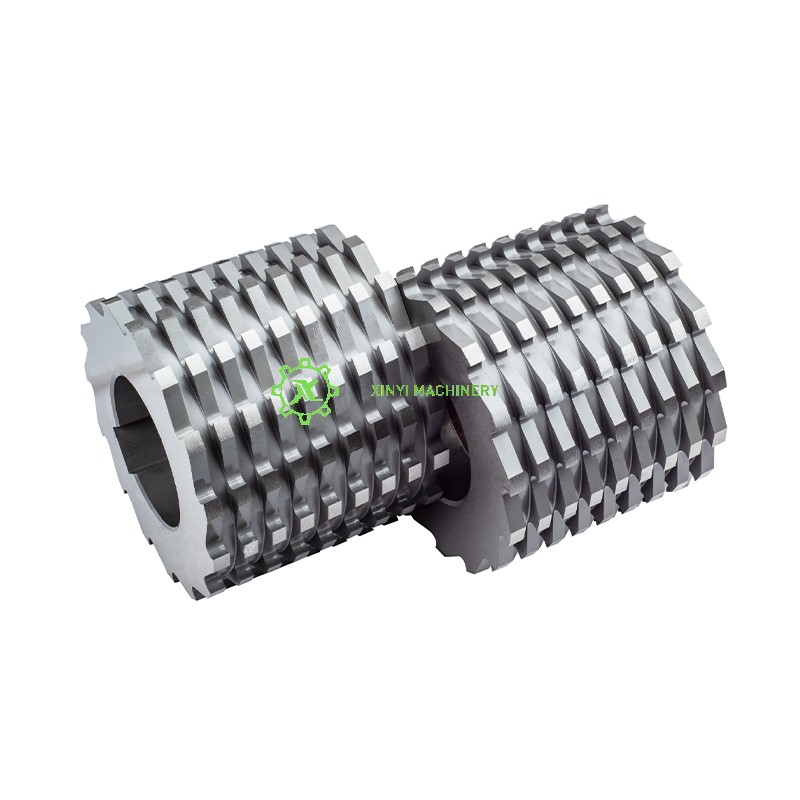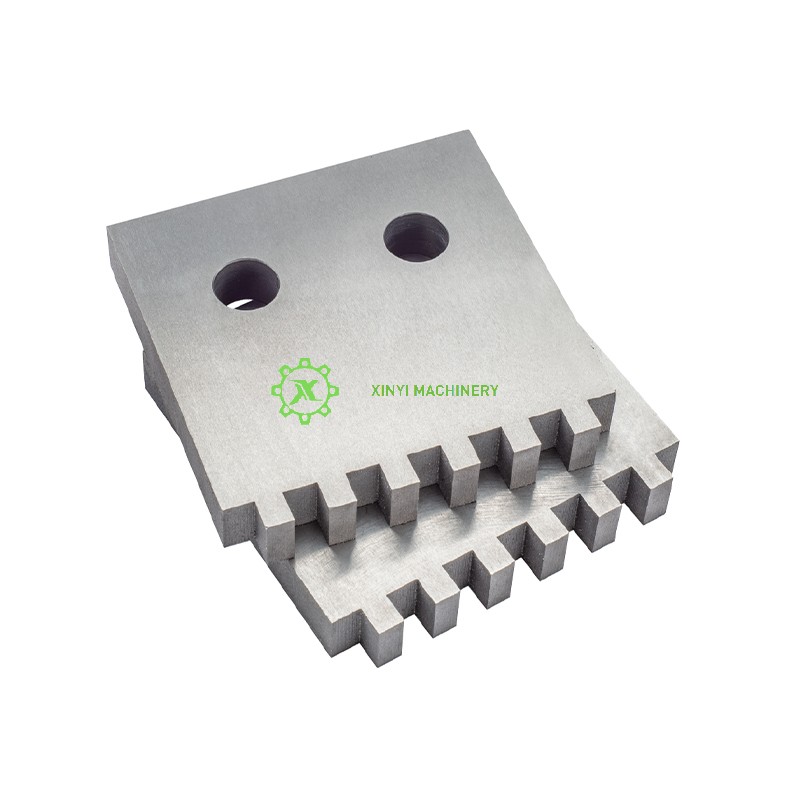
Yes, the blades of plastic crushers must be heat-treated.
As a leading China manufacturer of crusher blades (XINYI MACHINERY), we confirm that heat treatment is not optional—it is a critical manufacturing step for any high-quality plastic crusher blade, shredder blade, or grinder blade.
Here is why heat treatment is mandatory:
1. It Achieves the Necessary Hardness (HRC)
· Untreated steel is too soft. It would dull within minutes of crushing hard plastics (ABS, nylon, PC, etc.).
· Heat treatment (typically quenching + tempering) raises the hardness to the optimal range: 50-62 HRC, depending on the plastic type. This allows the blade to cut cleanly and stay sharp longer.
2. It Dramatically Improves Wear Resistance
· Plastics are abrasive (especially glass-filled or reinforced plastics). Without heat treatment, the blade edge would wear down rapidly, leading to:
o Dusty, uneven regrind
o Increased energy consumption
o Frequent blade changes
3. It Balances Toughness (Prevents Chipping/Breaking)
· Too hard (over 62 HRC) makes blades brittle.
· Too soft (under 48 HRC) causes edge rolling.
· Proper heat treatment (e.g., vacuum heat treatment for D2, SKD-11, or HSS steel) creates a microstructure that is both hard and tough—resisting impact from foreign objects (screws, metal fragments) without shattering.
4. It Unlocks the Potential of Premium Tool Steels
High-end blades are made from:
· D2 / SKD-11 (Cr12MoV) – Requires deep cryogenic + multiple tempering.
· HSS (M2, M35) – Requires high-temperature austenitizing.
· Powder metallurgy steel (e.g., ASP2053, V10) – Requires specialized heat treatment.
Without correct heat treatment, these expensive steels perform no better than mild steel.
What Happens If You Skip Heat Treatment?
· Low-cost blades sold by fly-by-night manufacturers are often made from untreated or poorly treated steel (e.g., AISI 1045 or 4140 annealed). Results:
o Blades fail in hours (not weeks or months)
o Melted plastic due to friction heat (dull blades generate excessive heat)
o Damage to the crusher rotor and screen
How XINYI MACHINERY Does It (Industry Best Practice)
We use programmable vacuum furnaces with:
1. Preheating – Stress relief
2. Austenitizing – Precise temperature control (±5°C)
3. High-pressure gas quenching – Minimizes distortion
4. Triple tempering – Eliminates retained austenite
5. Deep cryogenic treatment (-80°C to -120°C) for D2/HSS – Boosts wear life by 30–50%
Final Verdict
· For any serious plastic recycling operation: yes, 100% mandatory.
XINYI MACHINERY produces fully heat-treated blades for plastic crushers, single/dual shaft shredders, granulators, and pelletizing systems. Contact us for blades that last 3–5x longer than untreated alternatives.