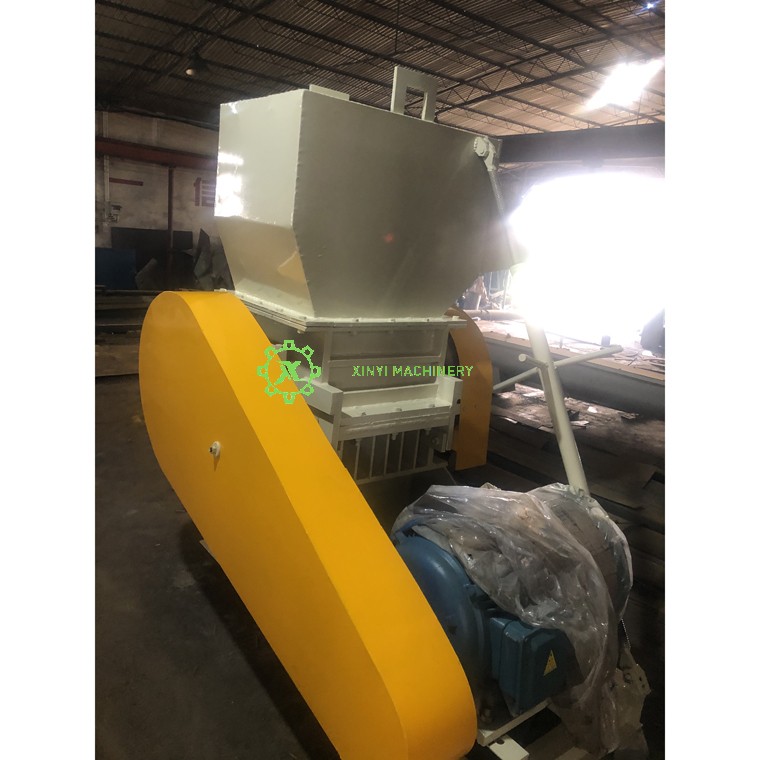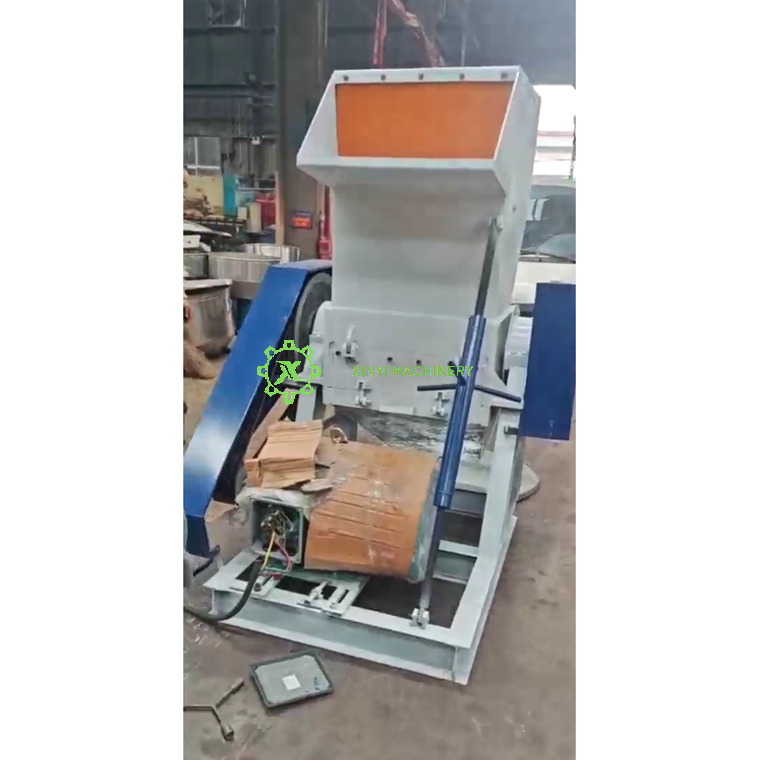
It gets to the heart of size reduction in plastic recycling. Both the Single Shaft Shredder and the Block Crusher are designed for this task, but they use different principles and are often suited for different stages or types of material.
Here’s a detailed breakdown of how each machine breaks waste plastic blocks into pieces and their typical applications:
1. Single Shaft Plastic Shredder
Mechanism:
· Rotating Shaft with Hooks/Cutters: A powerful, slow-turning rotor (shaft) equipped with hardened steel cutting hooks or blades rotates within a stationary chamber.
· "Pull, Tear, and Shear" Action: The waste plastic block is fed into the hopper. The rotating hooks grab the block, pull it in, and force it against a fixed counter-knife or the chamber wall. The combination of the rotor's torque and the stationary element shears and tears the plastic into smaller, irregular pieces (typically 50-000mm flakes or strips).
Best For:
· Primary / Coarse Size Reduction: Breaking down large, dense, and often irregular plastic blocks, purgings, or rejects into manageable "chips" or "flakes."
· Tough Materials: Excellent for thick-walled, fibrous, or tough plastics.
· Pre-processing: Its output is often fed into a secondary granulator or crusher for finer grinding.
Characteristics of Output:
· Irregularly shaped flakes or strips.
· Larger particle size range.
· May have higher friction heat generation.
2. Block Crusher (also called Central Lump Crusher)
Mechanism:
· High-Speed Rotating Blades: Features a high-speed rotor with multiple small, sharp blades (like a powerful blender or grinder).
· Impact and Cutting: The plastic blocks are fed into the crushing chamber, where they are struck repeatedly by the fast-moving blades. The primary breaking force comes from impact and high-speed cutting.
· Screen for Sizing:, a screen at the bottom determines the final particle size. The blades continually cut the material until it is small enough to pass through the screen holes.
Best For:
· Secondary / Fine Size Reduction: Taking pre-shredded plastic chips or smaller, brittle plastic lumps and crushing them into uniform, small granules or pellets (typically 8-20mm).
· Brittle Materials & Lumps: Ideal for breaking up agglomerated plastic lumps from silos, or sprue and runner rejects from injection molding.
· Inline Processing: Often installed underneath silos, dryers, or mixers to break up lumps that form during material handling.
Characteristics of Output:
· More uniform, granular, or pellet-like particles.
· Smaller, more consistent size.
· Generally less heat-sensitive due to faster cutting action.
Key Comparison & How to Choose
Feature | Single Shaft Plastic Shredder | Block Crusher |
Primary Action | Tearing, Shearing | Impact, High-Speed Cutting |
Rotor Speed | Slow, High Torque | Fast, High Speed |
Input Size | Large (bulky blocks, purgings) | Smaller (pre-shredded flakes, lumps, sprues) |
Output Size | Coarse flakes/strips (20-100mm) | Fine granules/pellets (3-12mm) |
Typical Stage | Primary / Pre-shredding | Secondary / Fine Crushing |
Ideal Material | Tough, thick, irregular blocks | Brittle lumps, agglomerates, smaller rejects |
Typical Workflow in a Recycling Plant
Often, these machines are used in sequence for optimal efficiency:
1. Step 1 (Coarse): Large plastic blocks are fed into a Single Shaft Shredder to be broken into fist-sized chips.
2. Step 2 (Fine): These chips are then conveyed to a Block Crusher or a granulator to be turned into clean, uniform granules ready for washing, extrusion, or pelletizing.
Regarding XINYI MACHINERY
XINYI MACHINERY supplies both types of machines. XINYI MACHINERY is a full-line leading manufacturer and supplier in China because many customers often need a complete system. When consulting with them or any supplier, you should provide details about:
· Material Type: (PP, PE, ABS, PVC, etc.)
· Input Size & Shape: (Dimensions of the blocks, are they purgings, lump agglomerates, etc.?)
· Desired Output Size: (What is the next step in your process?)
· Hourly Capacity Required.
They can then recommend whether you need just one machine or a combination (e.g., a Single Shaft Shredder for primary and a Block Crusher for secondary processing) to achieve your goal of breaking waste plastic blocks into usable pieces.