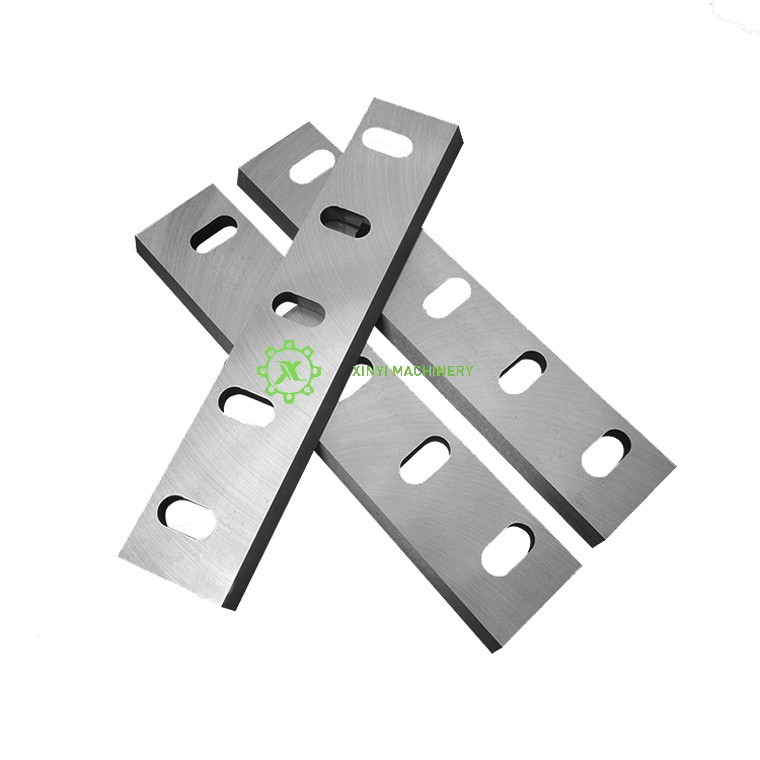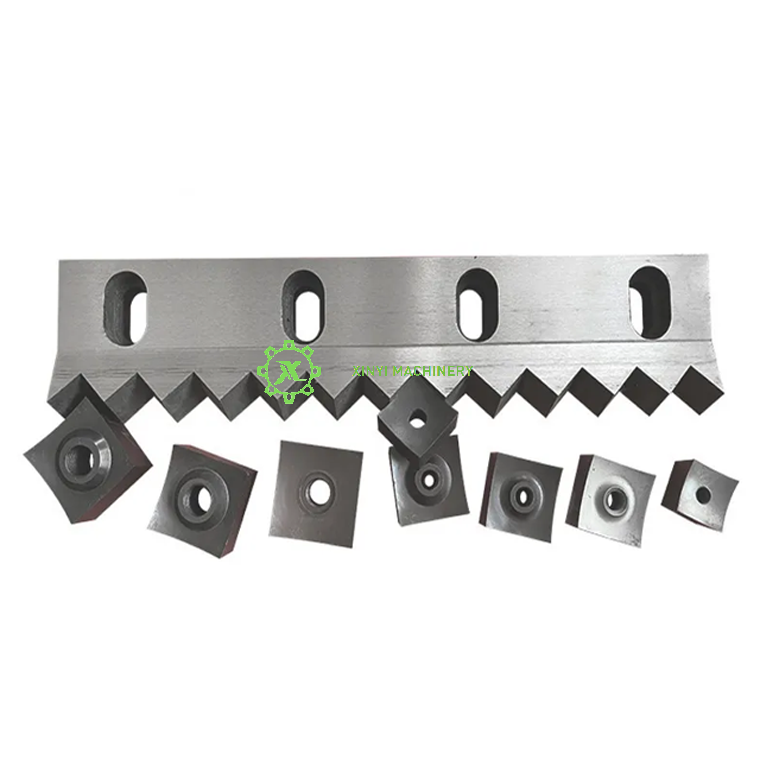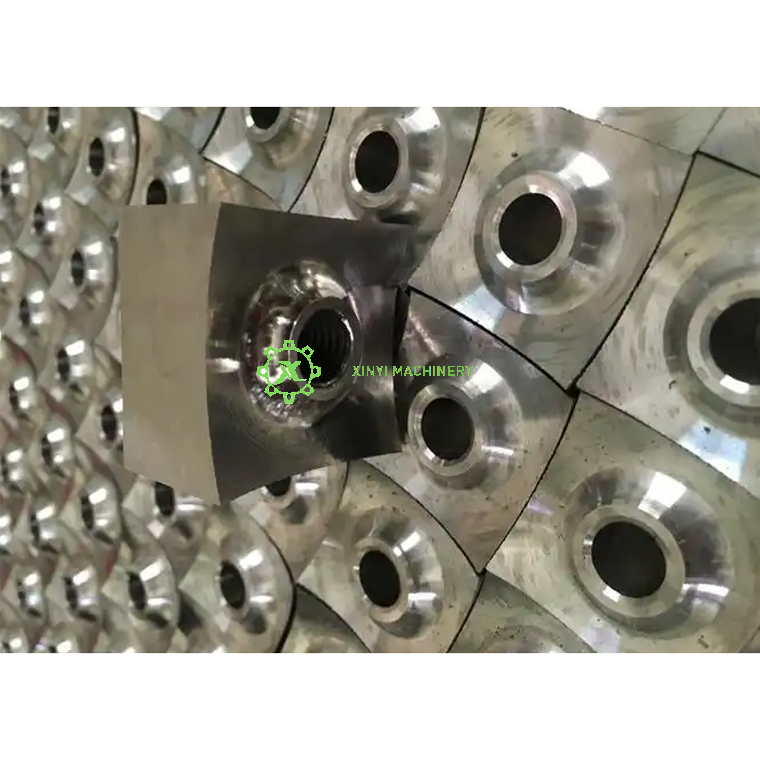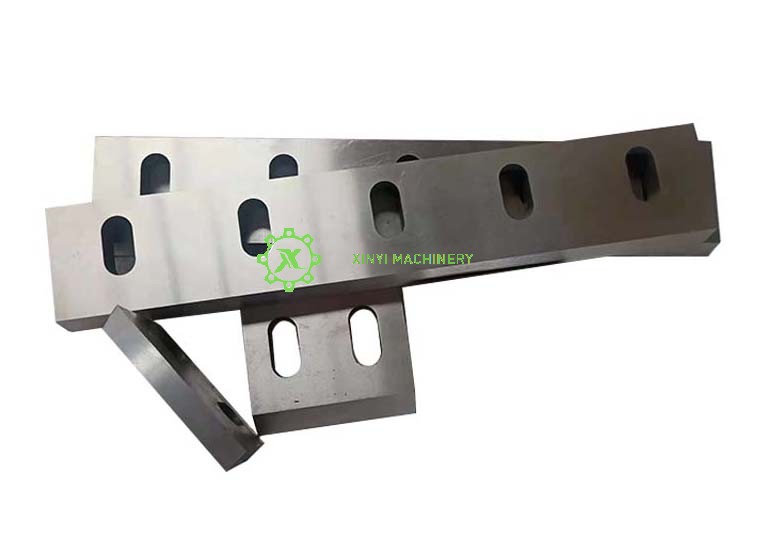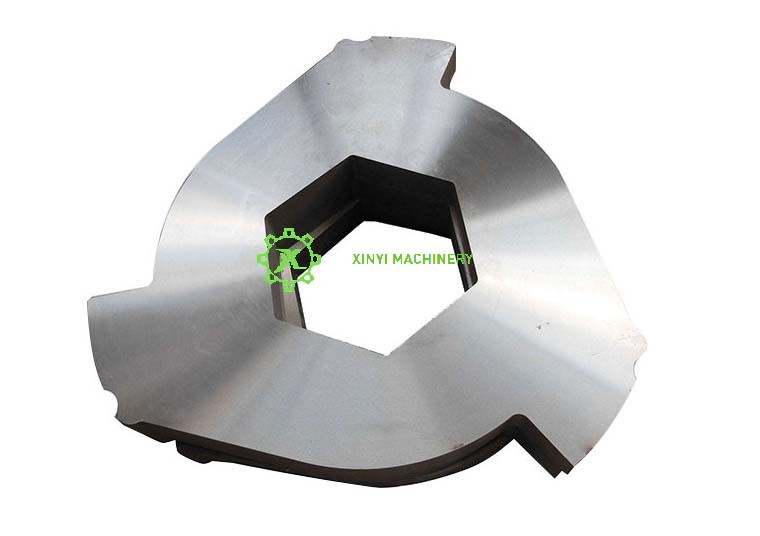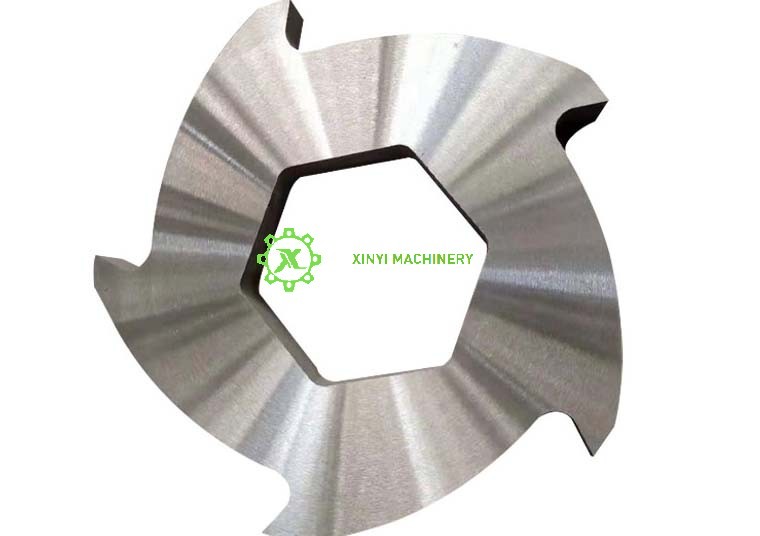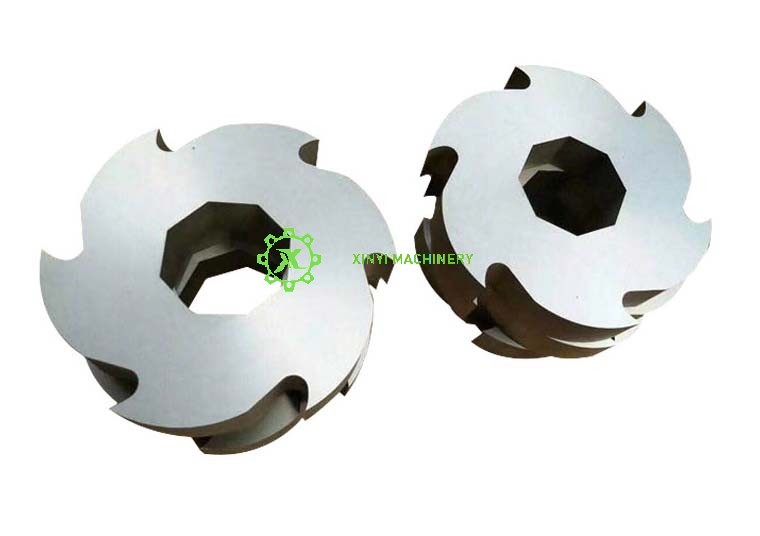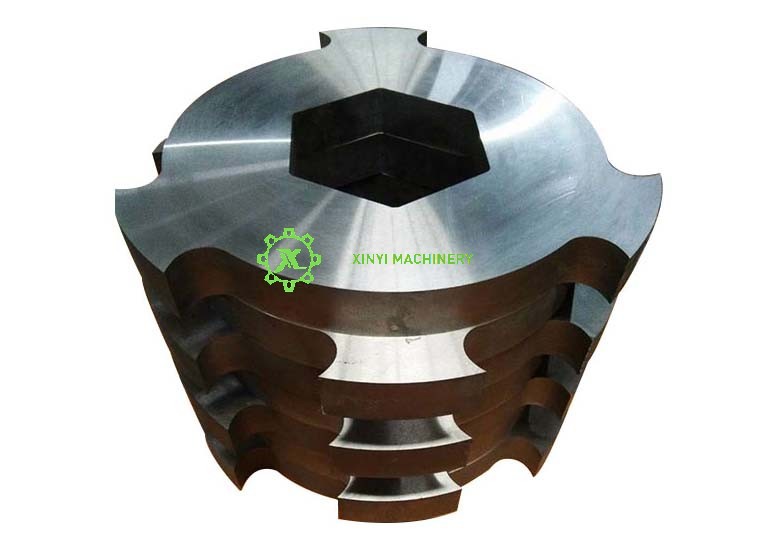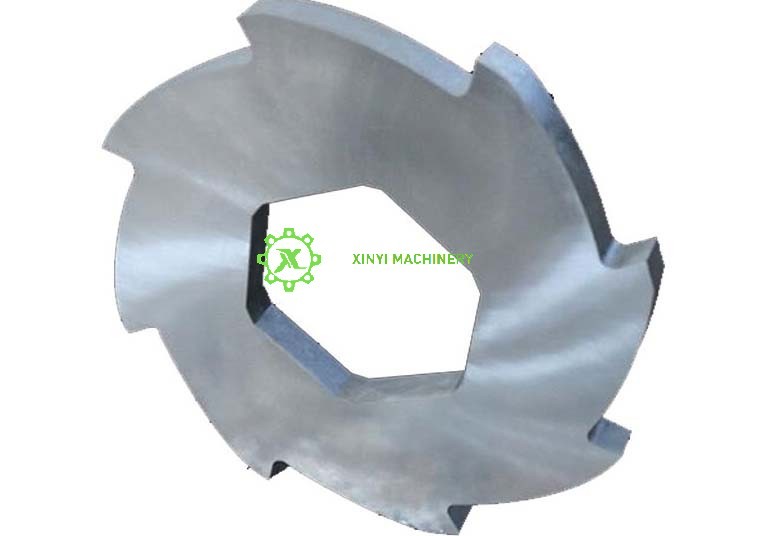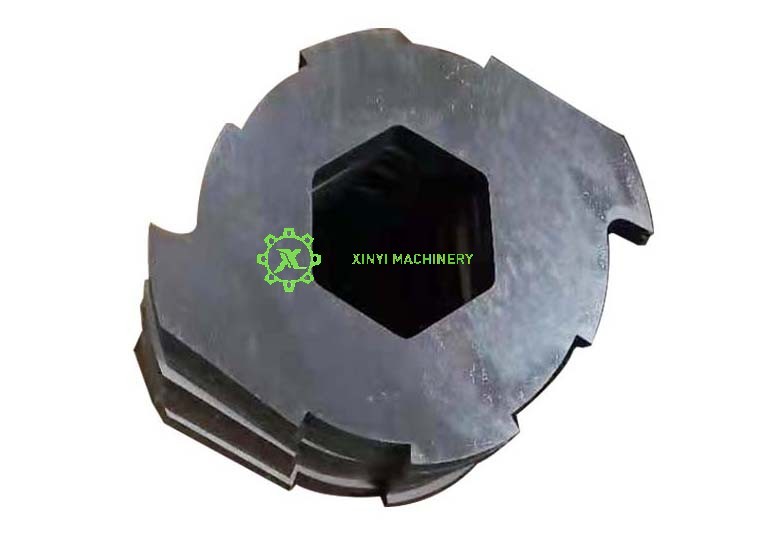
Yes, SKD11 is a very good and commonly used material for plastic crusher blades, especially for crushing hard and abrasive plastics.
However, its suitability depends heavily on the specific type of plastic being processed. Here’s a detailed breakdown:
Why SKD11 is a Good Choice (Advantages):
o High Wear Resistance: SKD11 is a high-carbon, high-chromium cold work tool steel (equivalent to AISI D2). It has excellent abrasion resistance, which is crucial for crushing materials like:
o Engineering Plastics: Nylon (PA), Polycarbonate (PC), Acrylic (PMMA), filled plastics (glass-filled, mineral-filled).
o Hard Plastics: PET bottles, PVC pipes, ABS.
o Film & Fibers: Continuous processing of films can also be abrasive over time.
o Good Toughness: It offers a better balance between hardness and toughness compared to more brittle materials like cemented carbide. This helps the blade resist chipping from occasional foreign objects (metals, stones) or uneven feeding.
o Good Dimensional Stability: It can be heat treated to high hardness (typically HRC 58-62) with minimal distortion, ensuring the blades maintain their precise geometry after treatment.
o Cost-Effectiveness: While more expensive than standard carbon tool steels (like 9CrSi), it is significantly cheaper than premium powders metallurgy steels or carbide-tipped blades. It offers a great balance of performance and cost for many applications.
Limitations and Considerations:
o Not the Best for Impact/Heavy-Duty Shredding: For very thick, bulky, or tough materials (like purgings, thick pipes, or metals mixed with plastic), steels with higher impact toughness like H13 (hot work steel) or 6CrW2Si might be preferred to prevent catastrophic breakage.
o Corrosion Resistance is Limited: While it has some chromium, it's not a stainless steel. For processing wet materials, acidic plastics, or in humid environments, stainless tool steels like SUS420J2 or SKD11 with protective coatings are better choices.
o For the Ultimate in Wear Life: For extremely abrasive materials (e.g., heavily glass-filled polymers, continuous 24/7 operation), higher-end materials are superior:
o Powder Metallurgy High-Speed Steels (like M6V): Much finer carbides for even better wear resistance while maintaining good toughness.
o Carbide-Tipped Blades: The cutting edges are brazed tungsten carbide, offering unparalleled wear resistance, though at a higher cost and with more brittleness.
Comparison with Other Materials Mentioned by XINYI MACHINERY:
· 9CrSi: A good, economical carbon tool steel. Less wear-resistant than SKD11 but tougher and cheaper. Suitable for general-purpose crushing of non-abrasive plastics (like PE, PP film).
· D2: This is essentially the American equivalent of SKD11. Performance is virtually identical.
· 55SiCr: A spring steel, offering exceptional toughness and fatigue resistance. Used for blades that undergo high shock/impact, but its wear resistance is lower than SKD11.
· M6V: A premium powder metallurgy steel. Outperforms SKD11 in wear resistance and hardness (can reach HRC 64-66) while maintaining toughness. It's a top-tier choice for the most demanding, abrasive applications.
Conclusion & Recommendation:
SKD11 is an excellent, all-round professional-grade material for plastic crusher blades. It is the industry standard for a wide range of applications, particularly where abrasion resistance is the primary concern.
Choose SKD11 when:
· You are crushing hard, semi-abrasive, or abrasive plastics (PC, PA, filled materials, PET, PVC).
· You need a good balance of wear resistance and toughness.
· You are looking for optimal cost-performance for demanding but not extreme conditions.
Consider a different material if:
· Primary concern is impact/shock (very thick lumps) → Look at H13 or 55SiCr.
· Primary concern is extreme abrasion (high glass content, 24/7 operation) → Look at M6V or Carbide-Tipped.
· Operating in corrosive/wet environments → Look at Stainless Tool Steels.
As a leading manufacturer XINYI MACHINERY would advise, the best practice is to consult with the engineers. Provide them with details about:
1. The type of plastic(s) you are crushing.
2. The form (film, lumps, pipes, purgings).
3. The required capacity and operating hours.
4. Your budget.
XINYI MACHINERY can then recommend the most cost-effective material (whether SKD11 or another) for your specific operation, ensuring long blade life and stable crushing performance.