What are the differences between single-stage and double-stage plastic extruder pelletizers?
Here’s a clear, practical comparison:
Single-Stage Plastic Extruder Pelletizer
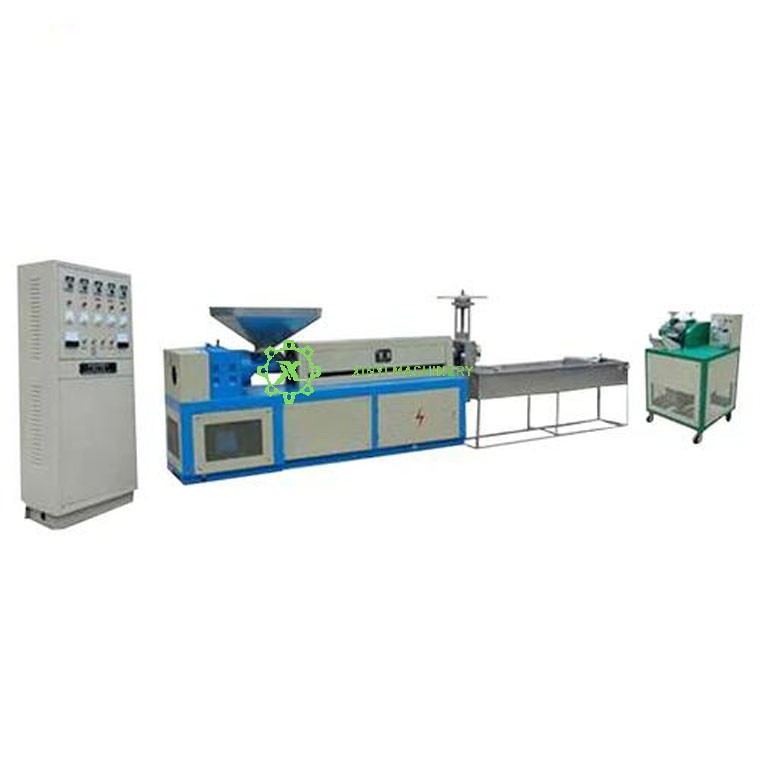
· Process: One extruder melts, filters, and pelletizes the plastic in a single pass.
· Best for: Clean, dry, pre-washed materials (e.g., post-industrial scrap, clean film, rigid waste).
· Degassing: Limited (usually one venting port).
· Filtration: Single screen changer.
· Pellet quality: Good, but may have bubbles or voids if moisture/volatiles are present.
· Advantages: Lower cost, simpler operation, less energy, smaller footprint.
· Disadvantages: Struggles with high moisture, heavy contamination, or mixed materials.
Double-Stage Plastic Extruder Pelletizer
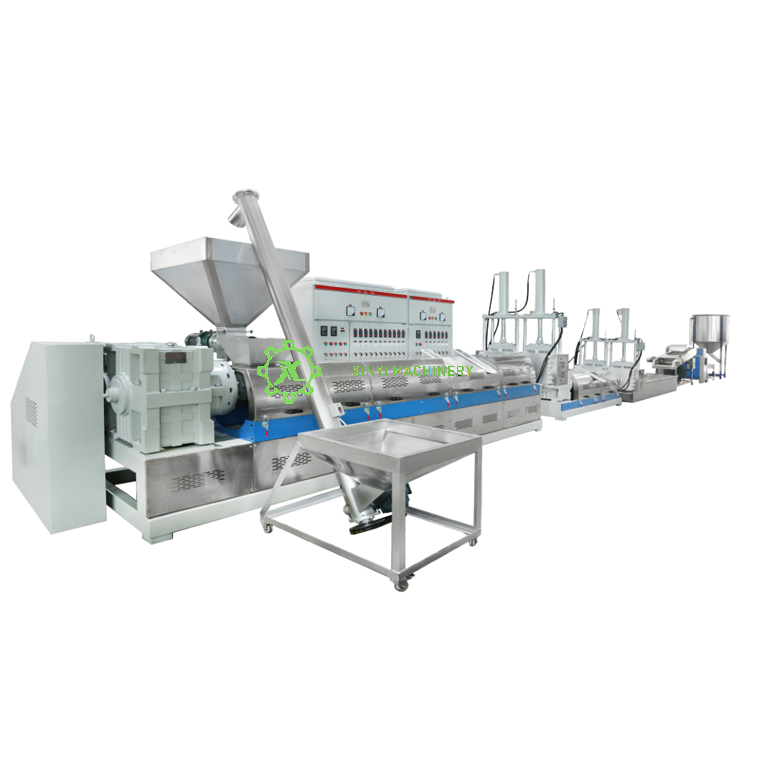
· Process: Two extruders in series (often called "mother-daughter" or "tandem").
o Stage 1: Melts, degasses, and pre-filters.
o Stage 2: Re-melts, builds stable pressure, and fine-filters before pelletizing.
· Best for: Challenging post-consumer waste (printed film, agricultural film, woven bags, materials with high moisture/oil/ink).
· Degassing: Two or more venting stages → removes water vapor, VOCs, and even deep-seated gases.
· Filtration: Double filtration (after each extruder) → cleaner final melt.
· Pellet quality: Excellent — dense, solid, no bubbles, uniform shape, higher market value.
· Advantages: Handles dirty/wet material directly and consistently, produces premium pellets.
· Disadvantages: Higher cost, more energy, larger floor space.
Quick Comparison Table
Feature | Single-Stage | Double-Stage |
Number of extruders | 1 | 2 (tandem) |
Typical materials | Clean industrial scrap | Wet, printed, heavily contaminated post-consumer waste |
Degassing efficiency | Low (one vent) | High (two or more vents) |
Filtration stages | 1 | 2 |
Pellet density & quality | Moderate | High-density, bubble-free |
Investment cost | $$ | $$$ |
Energy consumption | Lower | Higher |
Operational stability | Pressure fluctuates during screen change | Very stable due to second extruder |
✅ Practical Advice from a Machinery Perspective (like XINYI's range)
· Choose single-stage if you are processing clean, dry, homogeneous waste (e.g., factory scrap, purgings, pre-washed films) and price/energy savings are priority.
· Choose double-stage if you recycle post-consumer, printed, wet, or mixed plastics (e.g., agricultural film, packaging waste, regrind from washing lines) and you want high-quality pellets that can be sold for injection molding or blowing film.
XINYI MACHINERY offers both types. If you tell them your feedstock (e.g., used plastic film + moisture level + contamination type), XINYI can recommend the right model — typically, for any difficult or wet material, XINYI will lean toward their double-stage system.