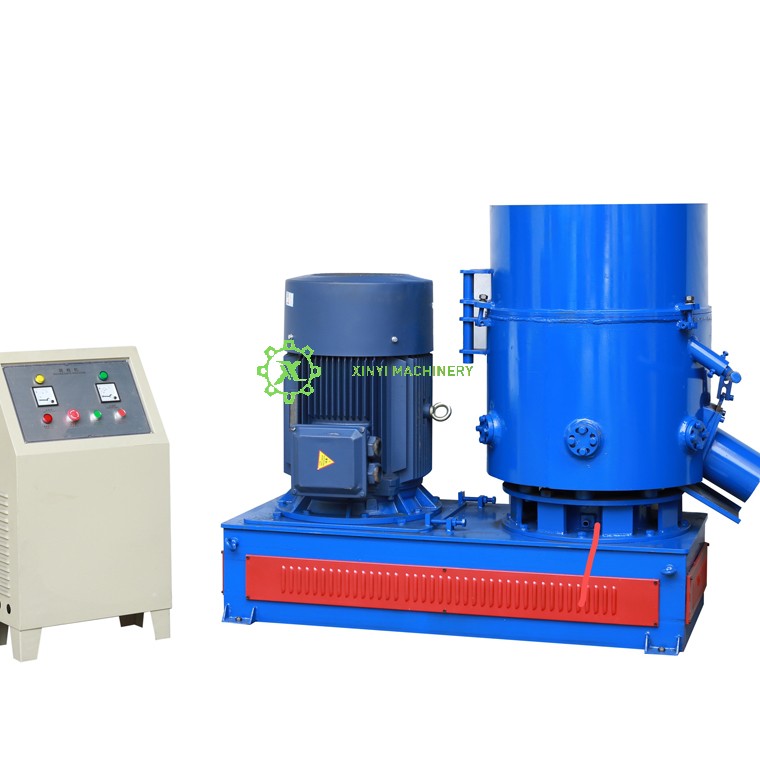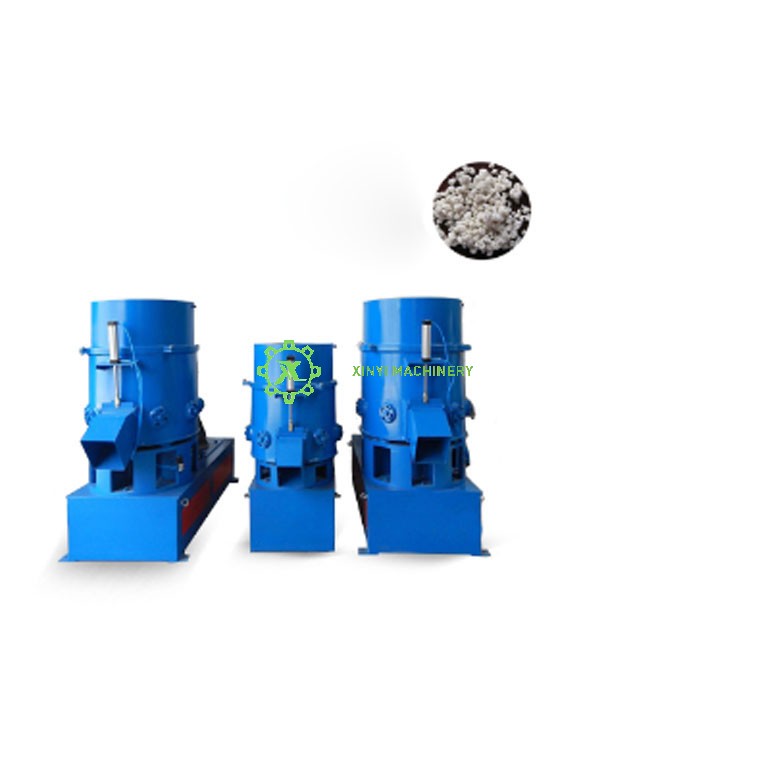
Here is a detailed explanation of what a plastic agglomerator is, specifically for recycling materials like plastic film and PE bags.
What is a Plastic Agglomerator?
A plastic agglomerator (also known as a plastic densifier or a recycling agglomerator) is a specialized machine used in the plastic recycling industry to process flexible and lightweight plastic materials—such as plastic film, bags, and woven sacks—into a more dense, granular, and free-flowing form.
Think of it as a combination of a high-speed grinder and a thermal densifier. Its primary goal is to solve the problem of handling "fluffy" waste by converting it into "agglomerated" granules that can be easily fed into extruders or sold as raw material.
Why is it Needed for Film and Bags?
Recycling materials like LDPE (Low-Density Polyethylene) and LLDPE (Linear Low-Density Polyethylene) film (e.g., shopping bags, shrink wrap, agricultural film) presents a major challenge:
· Low Bulk Density: Film is very light and fluffy. If you tried to feed this directly into a conventional extruder, it would bridge, clog, and fail to feed properly.
· Transportation Cost: It is expensive to transport loose film due to its high volume and low weight.
An agglomerator solves this by densifying the material, increasing its bulk density from approximately 50-100 kg/m³ (for film) to 400-600 kg/m³ (for agglomerated granules).
How Does a Plastic Film Agglomerator Work?
The process is a clever combination of mechanical friction and water cooling. Here is the step-by-step process for a typical batch-type agglomerator:
1. Feeding: The clean, dry (or semi-dry) plastic film or bags are fed into a large rotor chamber.
2. Cutting and Frictional Heating: Inside the chamber, a high-speed rotor with specially designed blades spins rapidly. The material is cut into smaller pieces by stationary blades attached to the chamber wall. The high-speed rotation creates intense friction between the plastic particles, between the plastic and the blades, and between the plastic and the chamber walls. This friction generates significant heat, quickly raising the temperature of the plastic to its softening point (around 100-140°C for PE). Crucially, it does not melt the plastic completely, but makes it soft and sticky, like dough.
3. Agglomeration (The "Popcorn" Effect): As the plastic softens, the particles begin to stick together. At this precise moment, a pre-measured amount of cold water is injected into the chamber.
4. Quenching and Shrinking: The sudden thermal shock (going from hot/soft to cold) causes the plastic mass to contract rapidly and shatter into small, irregular granules. This is often described as looking like popcorn or small gravel. The water also instantly stops the heating process, preventing the material from degrading.
5. Discharge: A discharge gate at the bottom of the chamber opens, and the centrifugal force of the rotor expels the finished, densified granules.
Key Benefits of Using an Agglomerator
· Increased Bulk Density: This is the primary benefit. The granules can now be easily fed into extruders for pelletizing or directly into manufacturing processes (like blow molding or injection molding).
· Improved Material Flow: The granules are free-flowing, making them ideal for pneumatic conveying systems and storage in silos.
· Drying: The frictional heat generated during the process also evaporates any residual moisture in the film, effectively drying the material.
· De-printing: The aggressive friction often helps to remove surface inks and contaminants from the printed film, concentrating them into the "fines" (dust) which can sometimes be separated later.
XINYI MACHINERY as a Supplier
As a leading manufacturer, XINYI MACHINERY specializes in building these robust machines. When XINYI offers a "PE bag agglomerator," XINYI can provide a solution tailored to handle the specific characteristics of post-consumer and post-industrial polyethylene film waste.
XINYI’s machines are typically designed to be durable and efficient, handling the high torque and frictional forces required for this process. They are a key piece of equipment in a plastic film recycling line, often placed after a washing line and before an extruder pelletizer.